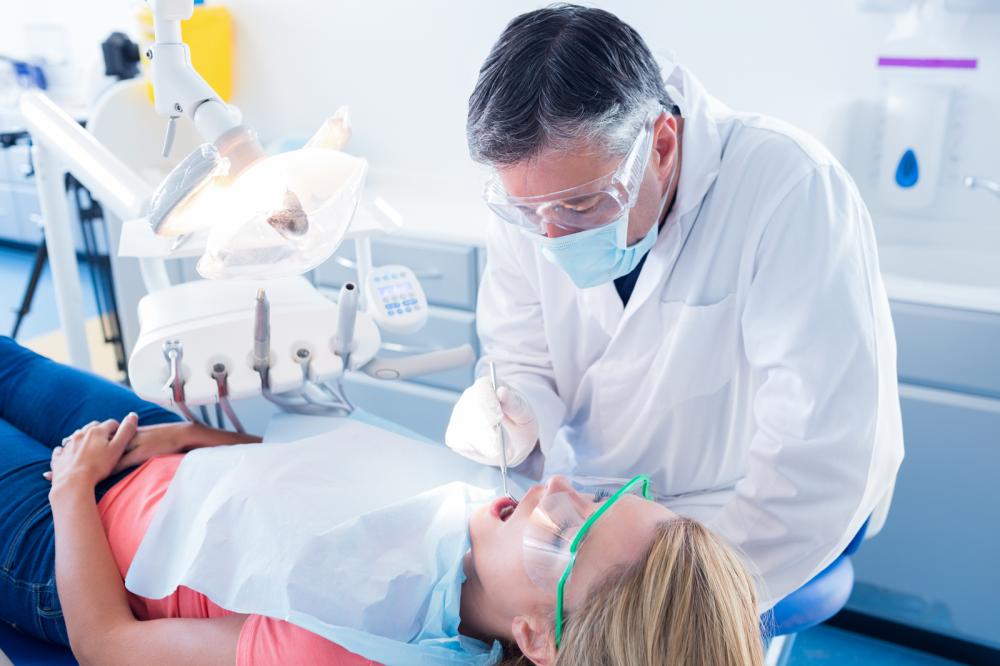
How To Take Good Care Of Your Dental Implants

How To Take Good Care Of Your Dental Implants

implantsSince our teeth serve as a very important aesthetic function, cosmetic dentistry has become quite important for the practice. Dentists can recommend cosmetic dental treatments such as dental implants to their patients who has broken or missing teeth. Teeth implants can also be prescribed to patients who have other concerns like teeth stains, discoloration, malpositions and rotations.

There are various restorative choices for teeth restorations and replacements. There are removable prosthetic devices such as dentures, dental crowns and bridges. However, dental implants specifically guarantee a long-term replacement for teeth.

Benefits of Implants

Implants are the most in demand treatment next to dental restorations because of the efficiency and convenience. Remember that a dental implant is a replica of the tooth’s root made of materials that are biocompatible. An implant is designed to copy your teeth’s natural feeling and is fully functional and prevents further tooth decay or trauma to your mouth.

Dental implants and their benefits:

  • Prevents periodontal disease
  • Promotes good oral health
  • Encourages healthy living like quitting smoking
  • Helps you commit to healthy habits by having a good oral hygiene and a routine trip to your dentist

Maintenance

Taking good care of your dental implant is important for your oral health. With proper care and a frequent visit to your dentist, your dental implant will last for a long time.

Here are a few tips to consider:

  • Brush and floss thoroughly the area where your teeth implants are
  • Rinse your mouth with a mouthwash
  • Schedule thrice a year visit to your dentist
  • Avoid toothpaste that contains abrasive ingredients like baking soda as it can remove the glaze on your implants

Dental implants are the most recommended option compared to removable prosthetic devices. Implants encourages good oral health and a healthy lifestyle. Dental implants can last a lifetime so follow your dentist’s instructions and keep your regular dental appointments.

Recent Comments

    Archives

    Office Hours

    Monday 10:00 to 6:00
    Tuesday 10:00 to 6:00
    Wednesday 11:00 to 8:00
    Thursday 10:00 to 6:00
    Friday 10:00 to 6:00
    Saturday 8:00 to 3:00
    Sunday Appointment only

    What Happens During Oral Surgery

    What Happens During Oral Surgery

    signs of bruxism

    It’s common to feel slightly anxious when you learn that you need oral surgery. In most cases, people feel nervous because they don’t know what to expect or they imagine the procedure will be painful.

    At Smiles of Elgin, your comfort is our priority. Whether you’re having a tooth extracted, an oral tumor removed, dental implants installed, or another procedure, you can depend on the expert knowledge of your oral surgeon. You will know exactly what is happening and be provided with ongoing pain relief appropriate to your procedure.

    Qualifications of an Oral Surgeon

    An oral surgeon is one of the most highly trained and skilled of the dental specialists. Four to six additional years of specialized training in oral surgery is required after completing four years of dental school. This advanced training consists of learning how to diagnose and treat disorders of the craniomaxillofacial complex. The American Dental Association recognizes oral surgery as one of nine dental specialties.

    Wisdom Teeth Removal Surgery

    Extraction of wisdom teeth is one of the most common types of oral surgery. Not everyone gets wisdom teeth, but those who do usually have them attempt to erupt between the ages of 17 and 25. It’s common to get all four wisdom teeth, although some people only have less. Wisdom teeth present a problem for most people because there isn’t enough room at the back of the jaw for them to come through properly. That means they must be removed.

    When wisdom teeth get trapped in the jaw due to lack of space, they can damage other teeth, cause an infection, or even cause a tumor to develop. Your oral surgeon first determines the degree of impaction and then begins to plan for your wisdom teeth extraction surgery. We provide you with aftercare instructions once the surgery is complete so you can heal quickly at home.

    Recent Comments

      Archives

      Office Hours

      Monday 10:00 to 6:00
      Tuesday 10:00 to 6:00
      Wednesday 11:00 to 8:00
      Thursday 10:00 to 6:00
      Friday 10:00 to 6:00
      Saturday 8:00 to 3:00
      Sunday Appointment only

      4 Reasons Why You Should Take Bruxism Seriously

      4 Reasons Why You Should Take Bruxism Seriously

      signs of bruxism

      Bruxism is also known as night grinding and it is the involuntary clenching and grinding of teeth, often experienced during sleep. It is most often observed at night, but can also be a daytime problem.

      The causes of bruxism are unknown, but many believe that it is related to stress, sleep disorders, effect of lifestyle, drugs, anxiety, depression and other psychological issues. It is involuntary, so it cannot be controlled; and often the signs of bruxism are not so noticeable at early stages, so it is not easily detected unless you have a companion that points out your awful habit.

      Some people do not take bruxism seriously. Teeth grinding does not seem so ominous compared to the other conditions, so it is easy for them to dismiss it. Ignoring the signs and symptoms of teeth grinding, however, is not a smart thing to do.

      The destruction and damage that the teeth and jaw can endure from a long history of grinding can be quite serious, so it is essential that you deal with it as soon as possible. Here are some reasons why:

      It destroys tooth structure

      Teeth grinding or bruxism causes irreversible damage to the teeth. Due to the constancy and intensity of the clenching activity, tooth structure can be abraded. The best sign of night grinding is the appearance of a flattened occlusal surface. The cusps will be gone, and the biting surfaces will be worn out, so that ample tooth structure is destroyed.

      It exposes the pulp tissues

      The pulp is the inner tissue that is encased by the hard tissues of the teeth and it has a direct connection to the nerves. Due to the clenching habit, tooth structure will be destroyed, exposing vital tissues and rendering the tooth more sensitive. When the pulp tissue is exposed, the tooth will be more sensitive, causing much discomfort to the patient.

      It causes tempormandibular joint disorders

      The temporomandibular joint is the jaw point that permits the movement of the lower jaw to open and close the mouth, as well as various other movements. At health, the bite or the complete set of teeth stabilizes the temporomandibular joint, so that function is efficient. The constant activity not only wears the TMJ, causing problems; but when tooth structure is destroyed and the bite is uneven, the joints endure most of the real damage.

      It causes facial asymmetry

      Unfortunately, whatever it is that is going on inside may produce signs outside. In other words, the collapse on one’s bite will bring about changes to the facial muscles, so that the patient’s face will appear uneven. Facial asymmetry is one of the severe consequences of prolonged night grinding. Apart from that, the further collapse of the bite will affect the skin on one’s face, so that it appears saggy, wrinkly and old.

      There are so many things that you cannot simply take at face value. There are some conditions that do not seem ominous at first glance, but are more serious than you think. To better understand what is really happening, you will need to seek a dental expert.

      Recent Comments

        Archives

        Office Hours

        Monday 10:00 to 6:00
        Tuesday 10:00 to 6:00
        Wednesday 11:00 to 8:00
        Thursday 10:00 to 6:00
        Friday 10:00 to 6:00
        Saturday 8:00 to 3:00
        Sunday Appointment only

        How to Maintain Family Dental Care and Wellness

        How to Maintain Family Dental Care and Wellness

        family dental care

        Dental care is not only important for beauty, it is crucial for your overall wellness as well.

        Everyone in a household, from children to adults, must follow some primary rules of oral care so that their teeth remain in a balanced situation. For example, brushing the teeth at least twice daily is a must for every family member. Those who neglect this rule will eventually face the consequences later in their lives.

        Each member of the family should know that dental care is not just about the teeth but keeping the entire mouth in a balanced oral care. Using a mouth rinse, flossing, and a regular visit to the family dentist for check-up are essential for maintaining oral wellness.

        Treatments for Restoring Damaged Teeth

        For broken or damaged teeth, the best way to restore them is to get cosmetic dental treatments like porcelain dental veneers and crowns. If missing some teeth, then dental bridges can be the best treatment for filling in the gap. However, if there is malocclusion or misalignment of the teeth it is best to seek orthodontic treatment to prevent tooth decay and TMJ.

        For teeth with stains or discolorations, teeth whitening is the most recommended for this, however, porcelain veneers can also cover up the teeth stains. Teeth whitening can already be performed inside the house if your dentist recommends a home whitening solution.

        If a family member has several missing teeth or no teeth at all, the dentures or dental implants are recommended. Dentures are convenient in that it can easily be removed and cleaned, while dental implants are perfect for those who want a stable, fixed, and long-lasting option for missing teeth.

        There are several dental treatments for issues regarding the teeth and gums. However, it is still wise to keep a good management of dental hygiene to prevent having to go for treatment. Keeping dental check-ups with the family dentist and maintaining good oral hygiene routine is still the best dental home care every family can achieve.

        Recent Comments

          Archives

          Office Hours

          Monday 10:00 to 6:00
          Tuesday 10:00 to 6:00
          Wednesday 11:00 to 8:00
          Thursday 10:00 to 6:00
          Friday 10:00 to 6:00
          Saturday 8:00 to 3:00
          Sunday Appointment only